
- All
- Product Name
- Product Keyword
- Product Model
- Product Summary
- Product Description
- Multi Field Search
Views: 0 Author: Site Editor Publish Time: 2025-12-14 Origin: Site


Have you ever wondered how a simple device can prevent costly equipment damage? The answer lies in air dryers. Compressed air systems, common across many industries, often face one major issue: moisture. Moisture can cause corrosion, equipment malfunctions, and even freezing of pipes.
In this article, we will explore how an air dryer works, the types available, and why they are essential for maintaining optimal performance in compressed air systems. By the end, you’ll understand how an air dryer can improve the efficiency and longevity of your equipment.
An air dryer is a device that removes moisture from compressed air by either cooling, absorbing, or filtering it out. In a typical compressed air system, as air is compressed, it gets hotter, and the moisture in the air becomes concentrated. As a result, when the compressed air cools down, the moisture condenses and may cause significant damage if not properly removed.
Air dryers work by using a range of techniques to ensure that the air exiting the system is dry and free of moisture. They are crucial for preventing issues such as rust, corrosion, and freezing, all of which can cause severe damage to both equipment and pipelines. Moisture removal from the air can be achieved through several different methods, depending on the type of air dryer used.
The presence of moisture in compressed air systems can lead to a number of problems. The most common issues include the corrosion of equipment, clogging of pneumatic tools, and inefficiencies in air-powered machinery. Moisture in the air can also cause damage to valves, sensors, and actuators, leading to costly repairs or replacements.
Air dryers help mitigate these problems by ensuring that the compressed air supplied to machinery and tools is free from moisture. By using a reliable air dryer, industries can:
Prevent corrosion and rust in critical equipment, piping, and tools.
Enhance the overall performance of pneumatic tools and machinery, allowing them to run smoothly and with less wear and tear.
Maintain a consistent air pressure, which is essential for ensuring optimal performance in manufacturing or assembly lines.
Reduce maintenance costs and downtime by protecting equipment from moisture-related damage.
To understand how an air dryer works, it's essential to look at the key components that make up the system. The primary components of an air dryer include:
Compressor: The compressor is responsible for compressing the air, raising both its temperature and moisture content.
Refrigerant: The refrigerant cools the air to remove moisture by condensation. This cooling process causes the water vapor to condense into liquid form.
Moisture Separator: This component separates the liquid water from the air, ensuring it is collected and drained away from the system.
Outlet System: Once the air has been dehumidified, it is routed through the outlet system to be used by the machinery or tools requiring compressed air.
These components work in unison to ensure that moisture is effectively removed, and the air supplied to the system is clean and dry.
| Component | Function |
|---|---|
| Compressor | Compresses the air, raising both its temperature and moisture content |
| Refrigerant | Cools the air to remove moisture by condensation |
| Moisture Separator | Separates the liquid water from the air |
| Outlet System | Delivers dry, dehumidified air to the machinery or tools |
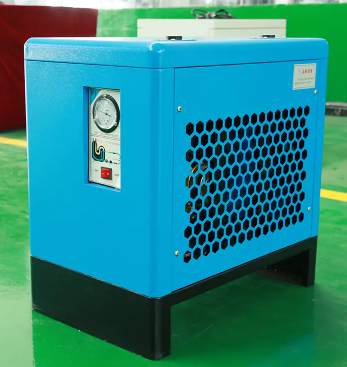
Refrigerated air dryers are some of the most commonly used air dryers across a wide range of industries. These dryers are popular because of their cost-effectiveness, ease of maintenance, and ability to remove moisture efficiently from compressed air. The principle behind refrigerated air dryers is relatively simple: the air is cooled down to a temperature just above freezing, causing water vapor in the air to condense into liquid water.
The condensed water is separated and drained away from the system, leaving behind dry air. This makes refrigerated air dryers ideal for general applications where extremely low dew points are not necessary.
Advantages: These dryers are generally affordable, easy to maintain, and provide reliable moisture removal for applications that don’t require a very low dew point.
Desiccant air dryers are designed to provide extremely dry air by using a desiccant material to absorb moisture. These dryers are capable of achieving very low dew points, making them suitable for industries that require air with low humidity, such as the pharmaceutical, food, and electronics industries. Desiccant air dryers typically consist of two towers: one tower dries the air, while the other regenerates the desiccant material.
Advantages: Desiccant air dryers are capable of achieving very low dew points (as low as -100°F or -73°C), making them ideal for applications that require ultra-dry air.
Membrane air dryers utilize a permeable membrane that allows moisture to pass through while blocking other gases. This makes them ideal for small-scale operations, outdoor applications, or environments where maintenance is difficult. Since these dryers have no moving parts, they require very little maintenance, making them a cost-effective solution for specific applications.
Advantages: Membrane dryers are simple, compact, and have low maintenance requirements. They are ideal for low-volume applications and are typically used in environments where space is limited.
| Air Dryer Type | Advantages |
|---|---|
| Refrigerated Air Dryers | Cost-effective;Easy to maintain;Reliable moisture removal |
| Desiccant Air Dryers | Achieves low dew points (as low as -100°F / -73°C);Ideal for industries needing ultra-dry air |
| Membrane Air Dryers | Simple design;Low maintenance;Compact |
The process begins when compressed air enters the air dryer. As air is compressed, its temperature and moisture content increase. At this stage, the air is hot and saturated with moisture, making it a prime candidate for drying.When using an air dryer in hot or humid environments, it’s essential to ensure that the system is equipped to handle the excess moisture.
The hot, moist air is then passed through a heat exchanger, where it is rapidly cooled by a refrigerant. The cooling process causes the water vapor in the air to condense into liquid water. The cooling phase is crucial for separating moisture from the air, as it reduces the temperature of the compressed air to a level where water vapor becomes liquid.Maintaining the heat exchanger and refrigerant system is critical for ensuring that the air dryer operates efficiently.
Once the moisture has condensed into liquid water, it is separated from the air and collected in a moisture trap. The collected water is then directed into drainage lines to be removed from the system.Ensure that the drainage system is functioning correctly to avoid any build-up of moisture that could lead to issues in the air system.
After the moisture is removed, the dry, cool air is reheated to a temperature similar to the original air inlet temperature. This ensures that the air remains dry and prevents condensation from forming when the air travels through piping or machinery.Properly reheating the air helps maintain consistent pressure and prevents new condensation from forming in the system.
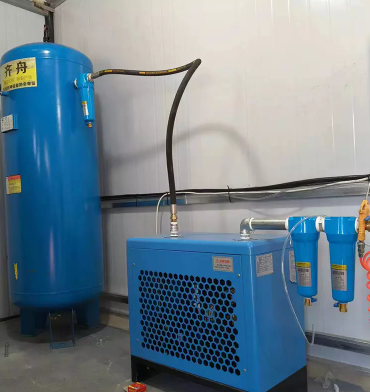
The efficiency of air dryers can be impacted by the environmental conditions, particularly temperature and humidity. High humidity can overload the dryer, while very low temperatures can reduce the effectiveness of the systemPlace the air dryer in a controlled environment to optimize performance and efficiency.
Choosing the right size and capacity for your air dryer is essential. If the dryer is too small for the application, it may not remove enough moisture. Conversely, an oversized air dryer may be unnecessarily costly to operate.Match the air dryer’s capacity to your system’s air consumption to ensure efficient operation and cost savings.
Air dryers require regular maintenance to ensure their optimal performance. Periodic checks, cleaning, and replacement of components are essential to avoid performance degradation over time.Implement a preventive maintenance plan to extend the life of your air dryer and reduce unplanned downtime.
| Factor | Impact on Performance |
|---|---|
| Temperature and Humidity Conditions | High humidity overloads the dryer; low temperatures reduce dryer effectiveness |
| Capacity and Size | Ensures efficient moisture removal without unnecessary costs |
| Maintenance and Operation | Regular maintenance optimizes performance and extends the dryer’s life |
By removing moisture from the compressed air, air dryers prevent corrosion and rust from affecting tools, machinery, and piping. This leads to a longer lifespan for your equipment and reduces the need for costly repairs.Regular use of an air dryer can significantly reduce the likelihood of water-related damage, saving your business money in the long term.
While air dryers do consume energy, their role in preventing moisture-related issues can lead to substantial long-term savings. By maintaining a moisture-free system, air dryers help reduce energy consumption by preventing inefficiencies in machinery and reducing wear and tear.Choose energy-efficient air dryers to save on operational costs without compromising on performance.
Air dryers help prevent costly downtime caused by equipment malfunction, freezing of pipes, and other moisture-related issues. By maintaining dry air in the system, air dryers ensure smooth operations and reduce the risk of interruptions.An air dryer that is properly maintained and sized for your application will ensure continuous, trouble-free operation.
In manufacturing, air dryers are crucial for preventing moisture-related defects in production lines. Moisture in compressed air can lead to defects in products, particularly in precision industries such as electronics or automotive manufacturing.In automotive assembly lines, air dryers ensure that pneumatic tools operate at peak efficiency without causing defects in the assembly process.
The automotive industry relies heavily on pneumatic tools, painting equipment, and assembly line machinery. Moisture in compressed air can cause tools to malfunction, leading to inconsistencies in product quality.Air dryers help ensure that painting booths maintain a moisture-free environment, allowing for consistent finishes and reducing the risk of paint defects.
In the food and beverage industry, air dryers are used to prevent contamination during packaging and bottling. Moisture in compressed air can introduce bacteria and other contaminants into the product, which can compromise quality and safety.Proper moisture control ensures that air used in food processing and packaging meets stringent hygiene standards.
Pharmaceutical manufacturing requires sterile environments. Moisture in compressed air can introduce contaminants, affecting product quality. Air dryers provide dry, clean air to maintain the highest standards of hygiene and product integrity.In pharmaceutical cleanrooms, air dryers maintain the required dry air conditions to prevent contamination during drug production.
Air dryers are crucial for removing moisture from compressed air systems. They prevent corrosion, freezing, and inefficiencies, which can lead to costly repairs and downtime. By understanding the various types, working principles, and applications of air dryers, businesses can improve the performance and longevity of their equipment. Proper maintenance ensures reliable operation over time.
Choosing the right air dryer is key for optimal system efficiency. A quality air dryer helps businesses reduce maintenance costs, prevent interruptions, and extend equipment life. AIRKING offers air dryers designed to provide value by ensuring long-lasting, moisture-free air, making your systems more efficient and reliable.
A: An air dryer removes moisture from compressed air using various methods such as cooling, absorption, or filtration, ensuring that air remains dry and safe for use.
A: Air dryers prevent damage caused by moisture, such as corrosion, equipment malfunctions, and freezing of pipes, improving system efficiency and extending equipment life.
A: A refrigerated air dryer cools compressed air to condense moisture, which is then separated and drained, leaving behind dry air.
A: Regular maintenance is crucial to ensure your air dryer operates efficiently, preventing buildup of moisture and avoiding operational issues.
A: The choice of air dryer depends on your application; refrigerated dryers are cost-effective, while desiccant dryers are better for low dew points and sensitive environments.
